

Telephone of Life
Most people visit Shirahama, a resort town along Japan’s southern coast, for its sandy beaches and relaxing onsens (hot springs).

One of its most famous landmarks is Sandanbeki, a majestic 200-foot cliff rising above the crashing sea. The view is breathtaking: raw, vast, and unforgettable.


But Sandanbeki carries a far heavier story beneath its beauty.
It has become one of Japan’s most infamous suicide sites. Many who come here in despair disappear into the waters below, swept away without a trace.
Japan’s suicide rate remains among the highest in the developed world, around 15.4 deaths per 100,000 people, roughly 50% higher than the global average.
Yet at the edge of this cliff stands something deeply unexpected:
a public telephone booth.
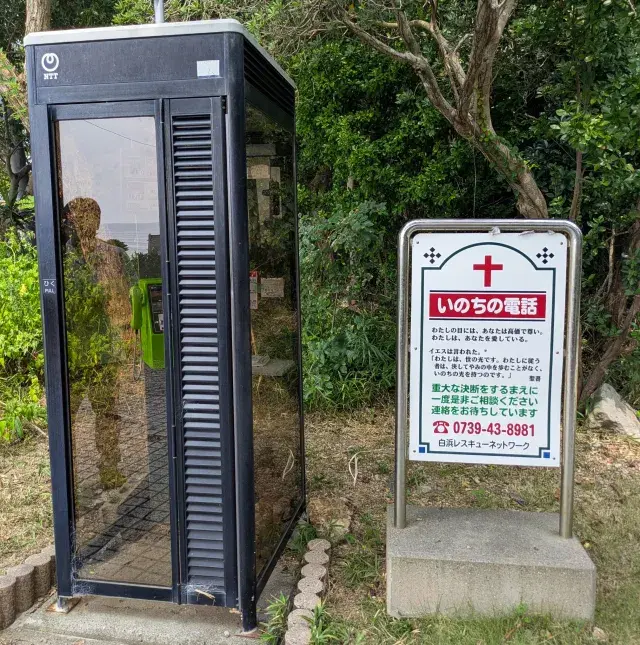
While most have been removed across Japan, this one has been intentionally kept open and active. It exists for those at the brink, offering a lifeline through a direct connection to the Shirahama Rescue Network (SRN), a ministry led by Pastor Fujiyabu and his church.

Outside the booth hangs a simple sign:
“Telephone of Life.”
Beneath it, a paraphrase of Isaiah 43:4 reads:
“You are precious and honored in My sight. I love you.”
And in bold, urgent words:
“Please call us before you make this important decision.”
Inside the booth, a cross adorned with flowers hangs beside a worn Japanese Bible and a bright green telephone.
Calls often begin the same way.
“Moshi moshi?” Pastor Fujiyabu answers.
On the other end is a trembling voice:
“Please… help.”
Without hesitation, he grabs his keys, rushes to his car, and drives into the night.
For nearly three decades, Pastor Fujiyabu has stood on the frontlines of suicide prevention at Sandanbeki. He has personally intervened and helped rescue more than 1,100 people from taking their lives.
In almost every encounter, he speaks the same unshakable truth: God’s forgiveness, grace, and mercy are still available.
“The key to change,” he says, “is to understand that God loves them.”

Sandanbeki is a place where many arrive believing their story has ended.
Yet because one pastor and one church chose to remain present in that place of despair, it has also become a place where countless lives have discovered hope, mercy, and a new beginning.
And perhaps this confronts us with a question we cannot easily ignore:
Who are the hurting people standing quietly at the edges of our own lives?
And will we, like Christ, move toward them rather than turn away?
Because the gospel is never only a message to be believed, it is a lifeline to be extended.
May we become people who carry the truth of Isaiah 43:4 into a weary world:
“You are precious and honored in My sight… and I love you.”
Written by Daniel Liu A reflection on "The Pastor Who Rescues People from Japan’s ‘Suicide Cliff’" The Pastor Who Rescues People from Japan’s ‘Suicide Cliff’ - Christianity Today


Comments